


CCMMP11 brings global standard for pasteurized liquid camel milk a step closer
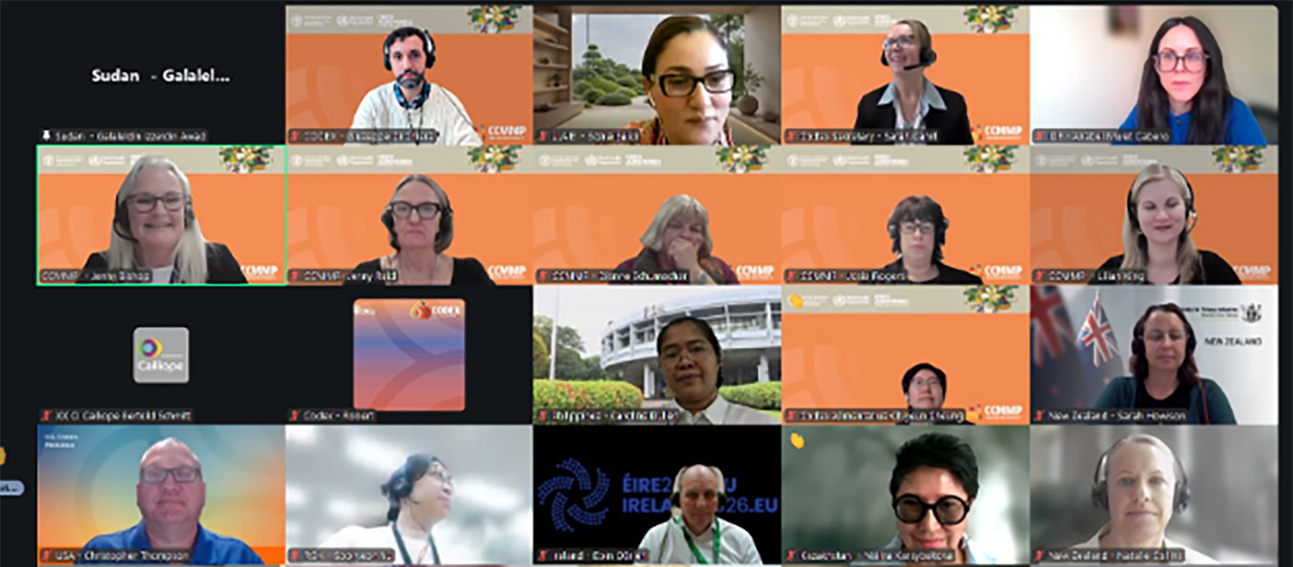
The report of the 11th Session of the Codex Committee on Milk and Milk Products (CCMMP) has been adopted in a virtual session following a month of work by correspondence to consider the draft standard for pasteurized liquid camel milk. Chairperson, Jenny Bishop said at the conclusion of the meeting, “I would like to express my sincere appreciation to all delegates for their constructive engagement, technical expertise, and collaborative spirit throughout our discussions.” A number of topics were subject to diverging views, but continued the Chairperson, “our discussions have highlighted the strength of international cooperation. Delegates have brought diverse perspectives and expertise, demonstrating once again the value of the Codex process in bringing Members and Observers together to address shared challenges and opportunities … I encourage Members and Observers to maintain their engagement through the circular letter process, so that we can continue to build on the progress we have made to advance our work effectively and efficiently during CCMMP12.”
The text has been forwarded to the Codex Alimentarius Commission for adoption at Step 5. In addition, provisions for food additives, food labelling, contaminants and food hygiene have all been forwarded to their respective general subject committees. In line with Codex practice, these provisions all align with existing relevant texts.
Two key issues required more in-depth discussion. The Chairperson convened an in-session working group (ISWG) to address the first of these, which was the proposal to include separate compositional requirements for bactrian and dromedary camels as the milk of these different species varies in composition. However, while the ISWG recognized the variability species-specific milks, it was concluded that the available data were insufficiently consistent and representative to support separate compositional requirements. It was consequently agreed that the standard will include a table containing parameters common to all camel milks, and to additionally include an appendix on the composition and natural variability of bactrian and dromedary camel milk.
The second issue related to the inclusion of a provision on the absence of beta-lactoglobulin, since this is a characteristic of authentic camel milk. However, views differed on the ideal threshold for this provision and a concomitant validation method. Following discussion of the draft standard at the next session of the Codex Alimentarius Commission, a circular letter will seek comments on this issue for further discussion at CCMMP12.
Read more
Related content

Germany hosts a ministerial welcome for Codex’s “profoundly human” committee
Opening the 45th Session of the Codex Committee on Nutrition and Foods for Special Dietary Uses (CCNFSDU) in Nuremberg, Bavaria, Germany, Chairperson Martine Püster reminded delegates that this is the...
Contaminants committee advances codes of practice for final adoption and new work proposals for approval by the Codex Alimentarius Commission
The 19th Session of the Codex Committee on Contaminants in Foods (CCCF) concluded in Cairo, Egypt, advancing three codes of practice for final adoption and agreeing on new work proposals, including guidelines...

Contaminants committee meets in Cairo as Egypt co-hosts
The 19th Session of the Codex Committee on Contaminants in Foods (CCCF) has opened in Cairo, Egypt with opening remarks from the Egyptian co-hosts, the Codex Alimentarius Commission Chairperson, Codex...

Meet the new chairperson of the Codex contaminants committee
At CCCF19, Dr Sally Hoffer will hand over the CCCF chairmanship to Dr Susanne Sütterlin. We sat down with Susanne to discuss her views, expectations and plans for leading the Committee.This interview is...

CCFICS28 concludes after “a very big but a very productive week”
The 28th Session of the Codex Committee on Import and Export Inspection and Certification Systems (CCFICS) has concluded after what the Committee Chairperson, Tom Black, called “a very big but a very productive...

A committee of shared purpose: Sally Hoffer on the evolution of CCCF
Dr Sally Hoffer has chaired the Codex Committee on Contaminants in Food since 2021. CCCF19 will be her last as Chairperson, as she hands over to her successor, Dr Susanne Sutterlin. We spoke with Dr Hoffer...

Interconnectedness is a key factor in inspection and certification work, as Committee meets for 28th Session
The 28th Session of the Codex Committee on Food Import and Export Inspection and Certification Systems (CCFICS) opened in a hybrid format in Perth, Australia, on 12 October, with opening remarks from the...

Have you met the Fishmonger?
Codex standards are science-based and developed with input from Codex Members and Observers who bring their experience and expertise to the standard development process. Implementation of Codex standards...

Discussions by correspondence on the proposed standard for pasteurized camel milk get under way
The newly reactivated Codex Committee on Milk and Milk Products (CCMMP) has started its 11th session, with a single agenda item, with the aim of developing a standard for pasteurized liquid camel milk....