


Contaminants committee advances codes of practice for final adoption and new work proposals for approval by the Codex Alimentarius Commission
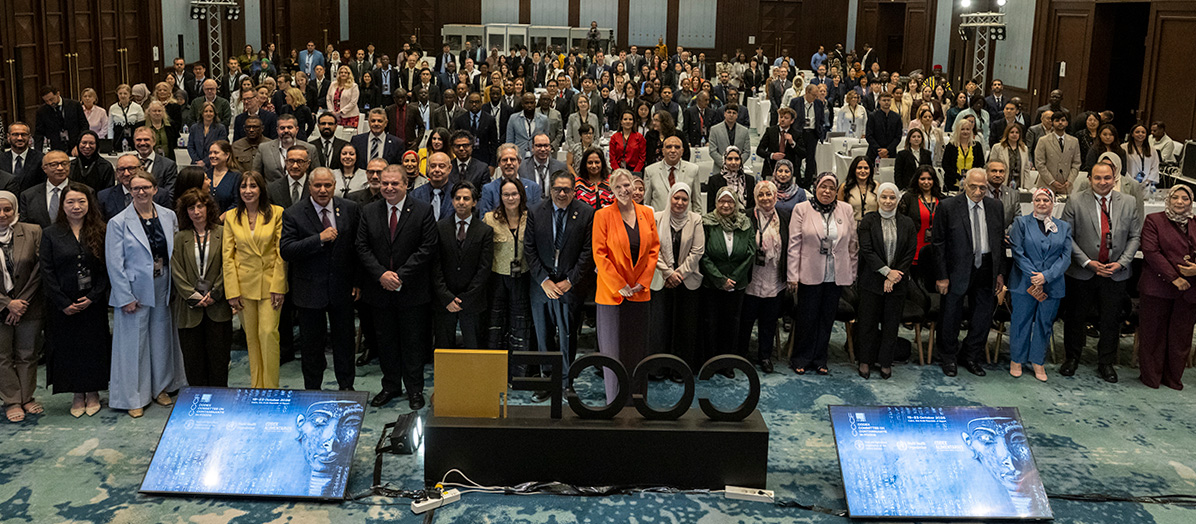
The 19th Session of the Codex Committee on Contaminants in Foods (CCCF) concluded in Cairo, Egypt, advancing three codes of practice for final adoption and agreeing on new work proposals, including guidelines on the safe use of recycled plastics in food packaging. “We made so much progress!” said incoming Chairperson Susanne Sütterlin, highlighting constructive discussions, active engagement by Members, and progress on all agenda items, which made for a very pleasant introduction as Chairperson of CCCF.
In line with its mandate and the Codex Alimentarius Commission strategic plan 2026–2031, the Committee completed three texts for submission to the Codex Alimentarius Commission (CAC) for final adoption, just one year after their approval as new work at CAC48 (2025):
- A new Code of practice to prevent and reduce tropane alkaloid contamination in food and feed.
- Revisions to the Code of practice on weed control to prevent and reduce pyrrolizidine alkaloid contamination in food and feed (CXC 74-2014).
- Revisions to the Code of practice to reduce aflatoxin B1 in raw materials and supplemental feedingstuffs for milk-producing animals (CXC 45-1997).
Work will continue on a consolidated code of practice to prevent and reduce cadmium contamination in foods, including specific provisions for rice and seaweed and integrating the existing Code of practice for the prevention and reduction of cadmium contamination in cocoa beans (CXC 81-2022), with a separate annex with specific provisions for cocoa beans if needed. Finalization is expected at CCCF20 (2027), with a view to final approval by CAC in 2028. This work builds on the FAO/WHO expert meeting on tropane alkaloids and the regular review of Codex standards for contaminants in food and feed, demonstrating CCCF’s timely efforts to keep contaminant standards relevant and up to date.
CCCF19 considered follow-up to CAC decisions requiring reviews of maximum levels (MLs) for methylmercury in tuna and total aflatoxins in certain cereals and cereal-based products, including foods for infants and young children. These reviews were envisaged within three to five years of adoption, subject to additional data providing greater geographic coverage. The Committee agreed to revisit the tuna ML and associated sampling plans in 2029. This will allow countries to complete ongoing research and assess the feasibility of collecting further data on total mercury, methylmercury and other relevant parameters across tuna species.
For aflatoxins, the Committee agreed on a Joint FAO/WHO Expert Committee on Food Additives (JECFA) call for data to be issued by the JECFA Secretariat to assess the need and feasibility of revising some or all existing MLs and establishing new MLs for the products concerned.
The Committee agreed to submit three proposals to CAC for approval:
- Revision of the Code of practice to reduce acrylamide in foods (CXC 67-2009).
- Development of a code of practice to prevent and reduce ochratoxin A contamination in dried fruits.
- Development of guidelines on the safe use of recycled plastics in food packaging.
CCCF19 agreed to forward numeric performance criteria for MLs in the Standard for contaminants in food and feed (CXS 193-1995) to the Codex Committee on Methods of Analysis and Sampling (CCMAS) for endorsement, followed by CAC adoption and inclusion in the Standard for methods of analysis and sampling (CXS 234-1999).
The Committee also clarified lot acceptance provisions for consignments of certain spices greater than or equal to 25 tons to comply with the MLs for aflatoxins and ochratoxin A. Other relevant sampling plans in CXS 193-1995 will be reviewed for consistency, with revised plans expected to proceed from CCCF20 to CCMAS for endorsement and subsequently to CAC for adoption.
CCCF19 agreed to extend the existing MLs for arsenic and lead in edible fats and oils to microbial omega-3 oils and forwarded the amendments to CAC for final adoption.
The Committee also agreed that work towards MLs for certain heavy metals and marine biotoxins in seaweed and laver products could proceed, subject to countries volunteering to prepare discussion papers to assess the need and feasibility of establishing MLs and consider other risk management measures, based on available data. These outcomes respond to requests from the Codex Committees on Fats and Oils (CCFO) and on Fish and Fishery Products (CCFFP).
These outcomes highlight CCCF’s timely response to Codex Members’ needs raised through committees such as CCFO and CCFFP, and the Codex system’s effective mechanisms for collaboration and referral of requests between committees.
CCCF19 agreed on its priority list of contaminants for JECFA evaluation. Future work includes developing risk management approaches for applying MLs to spice mixtures and guidance on data collection and analysis to support ML development. The Committee will continue to identify and prioritize standards for review, follow up on JECFA evaluations, and on FAO/WHO expert meetings and consultations. These efforts will keep Codex contaminant standards aligned with the latest food safety developments, addressing existing and emerging contaminants to protect consumer health and ensure fair practices in the food trade.
Read more
Related content

Germany hosts a ministerial welcome for Codex’s “profoundly human” committee
Opening the 45th Session of the Codex Committee on Nutrition and Foods for Special Dietary Uses (CCNFSDU) in Nuremberg, Bavaria, Germany, Chairperson Martine Püster reminded delegates that this is the...

CCMMP11 brings global standard for pasteurized liquid camel milk a step closer
The report of the 11th Session of the Codex Committee on Milk and Milk Products (CCMMP) has been adopted in a virtual session following a month of work by correspondence to consider the draft standard...

Contaminants committee meets in Cairo as Egypt co-hosts
The 19th Session of the Codex Committee on Contaminants in Foods (CCCF) has opened in Cairo, Egypt with opening remarks from the Egyptian co-hosts, the Codex Alimentarius Commission Chairperson, Codex...

Meet the new chairperson of the Codex contaminants committee
At CCCF19, Dr Sally Hoffer will hand over the CCCF chairmanship to Dr Susanne Sütterlin. We sat down with Susanne to discuss her views, expectations and plans for leading the Committee.This interview is...

CCFICS28 concludes after “a very big but a very productive week”
The 28th Session of the Codex Committee on Import and Export Inspection and Certification Systems (CCFICS) has concluded after what the Committee Chairperson, Tom Black, called “a very big but a very productive...

A committee of shared purpose: Sally Hoffer on the evolution of CCCF
Dr Sally Hoffer has chaired the Codex Committee on Contaminants in Food since 2021. CCCF19 will be her last as Chairperson, as she hands over to her successor, Dr Susanne Sutterlin. We spoke with Dr Hoffer...

Interconnectedness is a key factor in inspection and certification work, as Committee meets for 28th Session
The 28th Session of the Codex Committee on Food Import and Export Inspection and Certification Systems (CCFICS) opened in a hybrid format in Perth, Australia, on 12 October, with opening remarks from the...

Have you met the Fishmonger?
Codex standards are science-based and developed with input from Codex Members and Observers who bring their experience and expertise to the standard development process. Implementation of Codex standards...

Discussions by correspondence on the proposed standard for pasteurized camel milk get under way
The newly reactivated Codex Committee on Milk and Milk Products (CCMMP) has started its 11th session, with a single agenda item, with the aim of developing a standard for pasteurized liquid camel milk....