


Digital tools can strengthen food control systems, but regulatory decisions should remain subject to human oversight
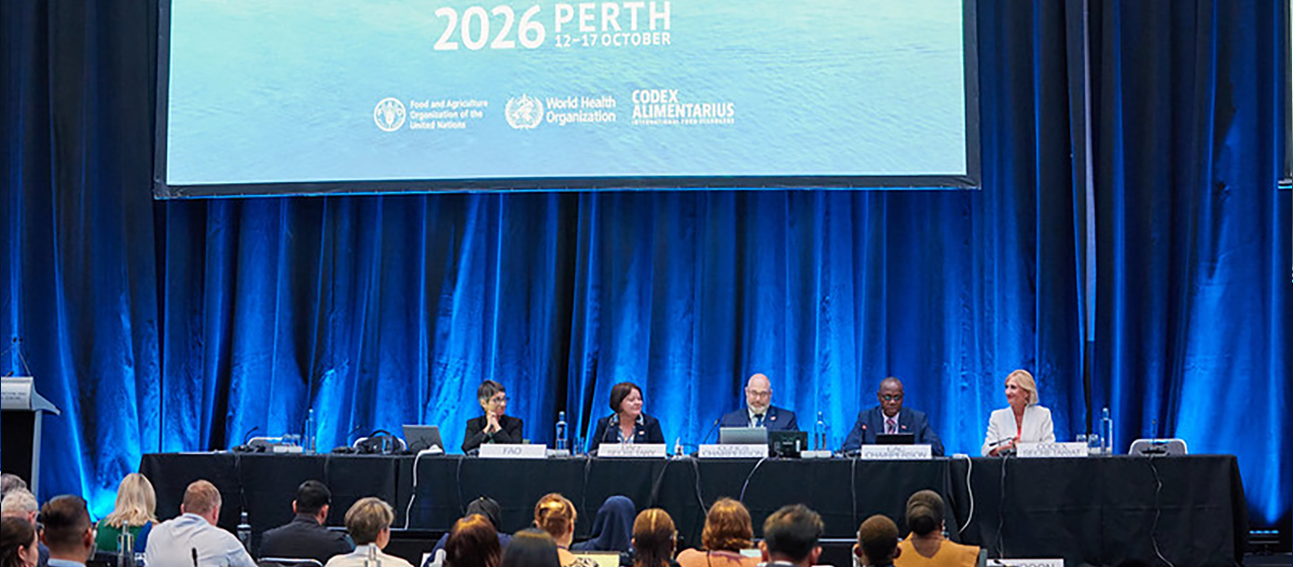
At an event showcasing tools and initiatives to digitalize food control systems during the 28th Session of the Codex Committee on Food Import and Export Inspection and Certification Systems (CCFICS28) last week, FAO officers and colleagues stressed the importance of human assessment, oversight and capacity to develop tailored solutions for every country and context.
Speaking at the event, Dr Allan Azegele, Chairperson of the Codex Alimentarius Commission, highlighted the potential of digitalization to improve the efficiency, transparency and reliability of national food control systems. Electronic certification, digital inspection tools, traceability systems and data-driven risk assessment can strengthen decision-making, information exchange and safe trade. However, implementation costs, infrastructure gaps, limited technical capacity, interoperability, cybersecurity and data protection remain important challenges. He emphasized the need for inclusive, context-appropriate solutions and capacity development, and noted the role of Codex and CCFICS in promoting harmonization, confidence and cooperation.
“Digitalization should not be viewed as an end in itself,” said Dr Azegele. “Its value lies in the practical improvements it delivers in protecting consumer health, strengthening regulatory oversight and facilitating fair practices in food trade.”
Four initiatives presented by FAO colleagues illustrated how digital tools can support food control in different contexts, from remote inspection and training in Ghana to electronic notifications of food safety issues affecting traded aquatic products. Other approaches included using imagery and machine learning to assess hygiene-related infrastructure in street food settings in Kolkata, India, and an application to help competent authorities in low- and middle-income countries categorize food businesses according to risk and prioritize inspections. “Together, these initiatives demonstrate how digital solutions can improve access to information, support risk-based decision-making and strengthen food safety monitoring,” said Catherine Bessy, from FAO’s Agrifood Systems and Food Safety Division. She also highlighted the importance of reliable data, appropriate infrastructure and solutions adapted to local circumstances.
A discussion moderated by Dr Anna Somerville, Chairperson of the CCFICS electronic working group on digitalization of food control systems, examined the safeguards needed to use digital evidence reliably. Participants considered the importance of data quality and traceability, clear governance and confidentiality safeguards, and defined procedures for responding to alerts and conducting on-site inspections when necessary. “Remote tools should not result in ‘inspection without inspectors,’ but provide better evidence to help inspectors focus their expertise where it is most needed,” said Blaise Ouattara, former FAO regional food safety officer for Africa.
The event demonstrated how practical experience with digital tools can inform the principles for the digitalization of national food control systems being considered by CCFICS28. The initiatives reflected key considerations in the draft principles, including risk-based and proportionate approaches, oversight and transparency, system coherence, data stewardship, and appropriate governance and legal frameworks.
“This side event showed that digitalization initiatives are already being implemented across countries at different income levels,” said Dr Somerville, adding, “The experience generated by these initiatives can inform, and benefit from, the principles on the digitalization of food control systems considered by CCFICS28.”
Read more
Related content

CCFICS28 concludes after “a very big but a very productive week”
The 28th Session of the Codex Committee on Import and Export Inspection and Certification Systems (CCFICS) has concluded after what the Committee Chairperson, Tom Black, called “a very big but a very productive...

Interconnectedness is a key factor in inspection and certification work, as Committee meets for 28th Session
The 28th Session of the Codex Committee on Food Import and Export Inspection and Certification Systems (CCFICS) opened in a hybrid format in Perth, Australia, on 12 October, with opening remarks from the...